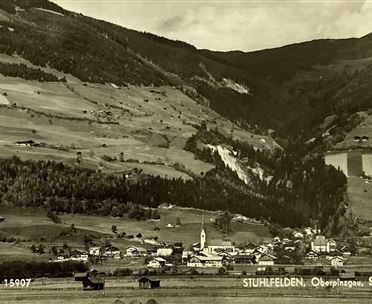
in Mittersill - Hollersbach - Stuhlfelden
Historic houses
Mittersill
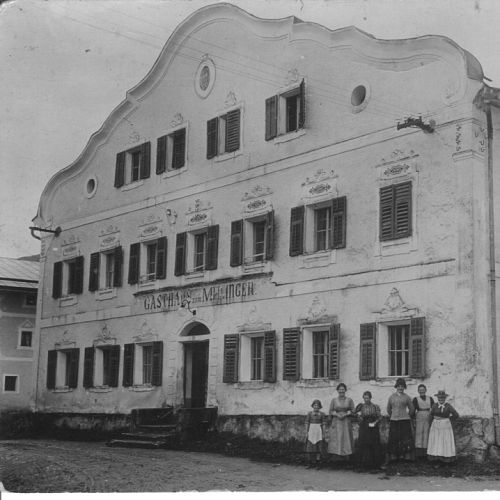
Meilinger Taverne
This striking building, with a façade that is unusual for Mittersill, has been known as an inn and tavern for many centuries, as evidenced by its current name, ‘Taverne’. Once they had been granted a licence to serve alcohol, the owners were able to serve wine, beer and spirits. The former Taschllehen, complete with its tavern rights, is closely linked in its history to the Meilinger, Oberkofler and Hochfilzer families of innkeepers, and most recently as a award-winning restaurant run by the Klackl family.
The building is regarded as the hub for the medieval salt trade from Hallein to this location. The salt carriers transported the salt further south via the Felber Tauern.
It is one of the few buildings in the market town that was never destroyed by fire. The façade is reminiscent of the so-called Salzach-Inn architecture found in the towns from Braunau and Schärding to Passau.
From 1894, this market house temporarily housed the then newly founded Raiffeisenkasse Mittersill.
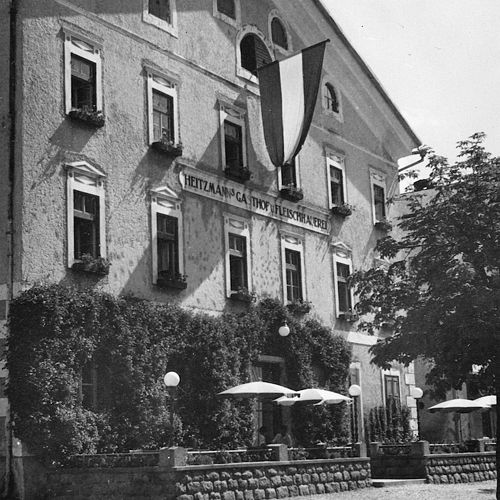
Heitzmann
As early as 1344, mention is made of the old Reitterlehen estate near Freythof in the market town of Mittersill, which was later known as Grundnerwirt. The old parish church once stood on the site of today’s St Anne’s Church, behind the house. Frequent flooding and the great market fire of 1746 completely destroyed the church building.
The innkeeper’s estate, which included a large farm, had been granted several trading licences by the authorities. As was customary in old Austria, these so-called ‘radizierte Wirts- und Pöckensgerechtsame’ (established innkeeping and tavern rights) in the Archdiocese of Salzburg encompassed the permission to trade and run a tavern.
For several generations, the property was initially owned by the Meilinger family, followed by the Heitzmann family. Since 2013, the country inn has been part of the Gassner family’s Bräurupan estate.
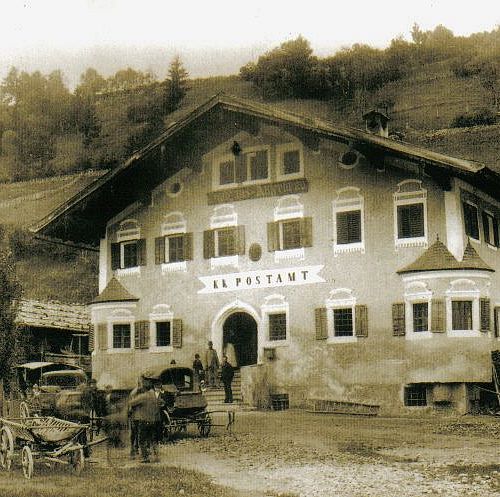
Gasthof Post
The house known as ‘außer der Bruggen’, first mentioned in 1350 as the ‘Eberhartlehen’ with the right to hold fairs, is one of the oldest buildings in the town. It has always been a restaurant, as evidenced by the old job titles of its owners – ‘bürgerlicher Gastgöb’, ‘Pierpräu’ and ‘Pöckenherr’.
Its location by the Salzach bridge, linking the market square to the sun-facing districts, gave the house particular significance. With the establishment of the post office in 1864 and, shortly afterwards, a telegraph office, the Außerbräu became the Gasthof Post and an early communications hub for Mittersill. In 1898, the station for the new Pinzgau Local Railway was built in the immediate vicinity.
The dance hall, added in 1890, became a popular social hub. The carnival season in Mittersill ended here every year with the traditional Mittersill ‘Faschingeingraben’ ceremony, during which the carnival effigy was submerged in the Salzach.
The Schett family owned the property for over 100 years; since 1999, the inn and the neighbouring Färberhaus have belonged to the Manzl family.
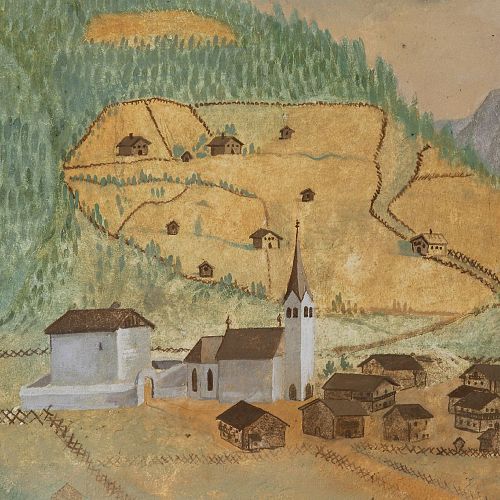
Felber church
The Felberkirche is often described as the most fascinating gem of the Pinzgau region, where art spanning many centuries presents a successful blend of Gothic and Baroque styles. Originally, a smaller church built in the 13th century for the Lords of Felben stood on this site.
Inside, the ribbed vault with the coloured coats of arms of the Salzburg nobility is of interest, as is a fragment of a fresco dating from 1476. Both the Gothic figures of the 14 Holy Helpers on the high altar and the painted busts of the same on the west gallery, as well as the painting of the Seven Refuges, point to its popularity as a pilgrimage church.
The Felber Church, dedicated to St Nicholas, forms the centre of the museum district together with the nearby Felber Tower. In the 1970s, this popular wedding church underwent a complete renovation.
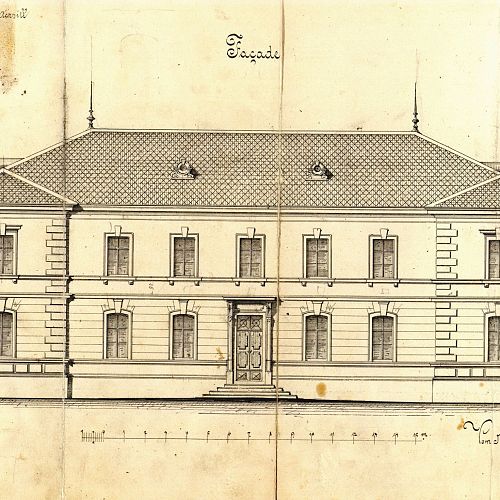
District court
Since the Middle Ages, jurisdiction in the Oberpinzgau region, from Krimml to Niedernsill, has been linked to the Mittersill district court. The district administrator was the highest-ranking official in the district and, as the representative of the sovereign, was entrusted with the administration and the exercise of lower-level judicial authority. At times, he was assisted by a district judge. Both officials were based at Mittersill Castle and were required to adjudicate disputes, deal with misdemeanours and punish capital offences. Torture and executions, such as those during the witch trial of 1575, were tragic highlights of the former judicial system. A ‘witch stone’ from the former place of execution serves as a reminder of this (Felberturm Museum).
Following the reorganisation of the judicial system in 1850, this role was transferred to district judges. From 1883 onwards, they worked alongside a number of officials in the newly constructed courthouse in the town. Until the 1960s, the courthouse also housed a prison wing with several detention cells.
In 2005, as a result of structural reforms, the Mittersill District Court was closed and its departments relocated to Zell am See. Since its refurbishment in 2016, the building has housed the Tauernapotheke pharmacy and associated healthcare organisations.
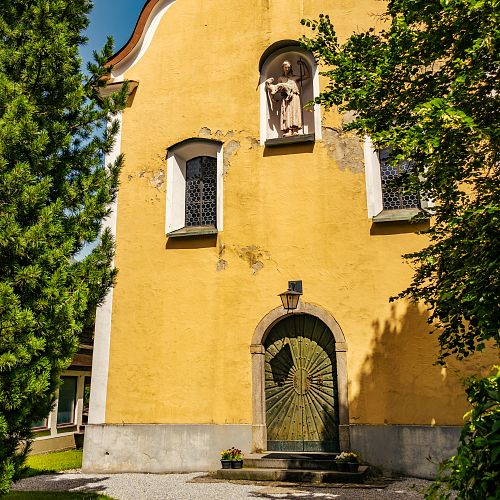
St Anne’s Church
It seems surprising that the people of Mittersill had two new churches built following the great market fire of 1746. Alongside the parish church in the southern part of the market square, the present-day St Anne’s Church was built on the site of the old St Leonard’s Church. This required a benefactor or sponsor, who turned out to be the Dean of Zell am Ziller – Johann Evangelist Hofer – a native of Mittersill. Hofer commissioned Tyrolean artists: the master builder Jakob Singer and the painter Christoph Anton Mayr, both originally from Schwaz. In particular, Mayr’s frescoes and the imitation stucco work lend the church a special character thanks to their rich colours.
A commemorative stone inside the church honours the Petrine missionary Georg Stadler, who was active here during the years of the great emigration. Stadler wrote a catechism that was widely used throughout the Archdiocese of Salzburg. In 1743, he was laid to rest in the old St Leonhard’s Church.
Since the 1960s, St Anne’s Church has been leased to the Protestant parish of Mittersill.
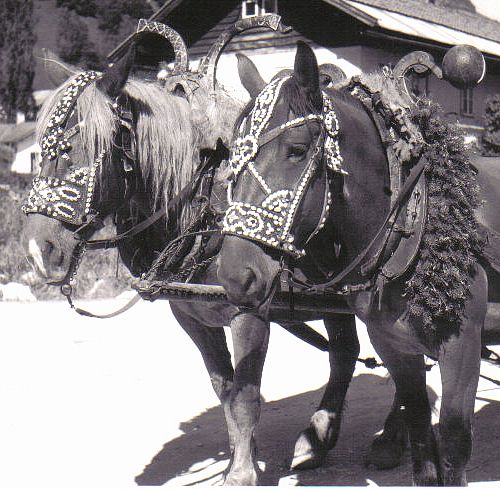
Ritschhaus
On the site of today’s Ritsch House once stood the house in the alley, also known as ‘beim Riemerliendl’. The name refers to a master strap-maker. These craftsmen were often also saddlers and made bridles for horses, as well as belts and straps. Around 200 years ago, a belt-maker named Leonhard – known as ‘Leanl’ in the Pinzgau dialect – worked here. The Lueghofer and Hölzl families from Mittersill were well known as such artisans. They produced satchels and waist belts for men’s traditional costumes, decorated with kauri shells and quill embroidery.
In the 1950s, the Ritsch family built the new house. They still run the tannery in Felben to this day. For many centuries, leather production in Mittersill has been a key foundation for the further processing of the material by shoemakers, saddlers and belt-makers.
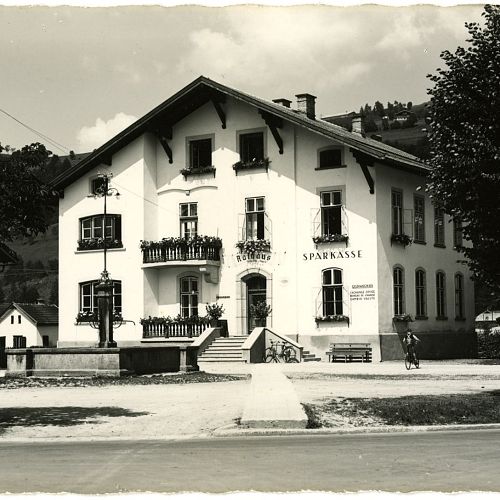
Town hall
On the site of today’s town hall stood, in the Middle Ages, a house in which a butcher or meat-cutter initially carried on his trade. From later owners named Philipp, the house also came to be known as ‘beim Metzger-Lipp’ or ‘Lipl-Wirt’. It was, therefore, also an inn. The market fountain, formerly flanked by a pillory and a court arbour on the market square, completed the town centre.
Following the great market fire of 1746 and further destruction in 1899, the market town council purchased the site of the fire and erected a new building. It formerly housed the municipal offices, the Mittersill Savings Bank and also the gendarmerie. The building on the market square was therefore always a meeting place for the people of Mittersill.
In 1993, the town hall was built in its present form.
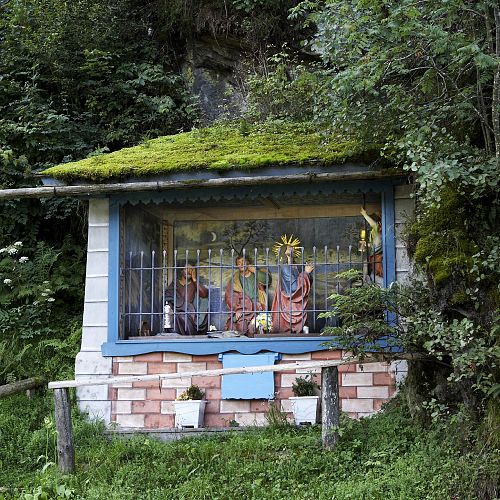
Ölbergkapelle
The Mittersill Ölberg, situated beneath the Palfen in Klausen, only regained its impressive appearance following its renovation in the 1990s. The restoration was carried out by Prof. John Anders and restorer Fritz Thaler. It transpired that the figures – contrary to what was originally assumed – do not date from the early 18th century, but are the work of an artist active between 1520 and 1600. As no names of sculptors from Mittersill have been recorded for the period in question, the creator of these valuable figures remains unknown.
With the refurbishment of the small building and the reconstruction of the external façade using coloured ashlars, the scene on the Oil Mountain has been given new protection against the elements. It depicts Jesus praying on the Oil Mountain and the sleeping disciples Petrus, Johannes and Jakobus. The original blue colour scheme has also been restored.
The preservation of this work of art is thanks to the Mittersill Lions Club, which acted as a generous sponsor.
Every year during Easter week, a pilgrimage takes place to the Mittersill Ölberg Chapel.
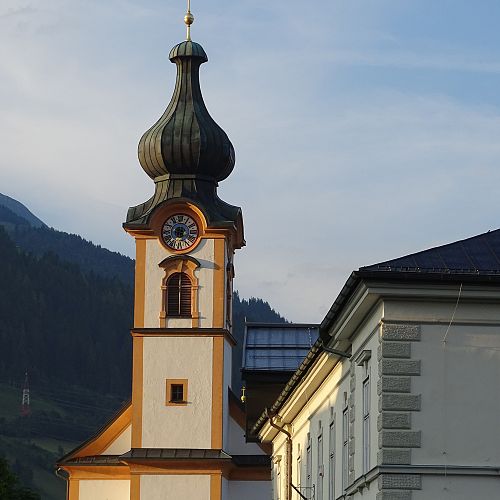
Parish church Mittersill
In 1746, the great market fire completely destroyed the old St Leonhard’s Church in Mittersill. In the years that followed, the new church was built on its present site according to plans by Johann Kleber of Salzburg. In 1754, Archbishop Sigmund von Schrattenbach consecrated the new church.
The old church yielded notable works of art, such as the statuette of St Leonhard (c. 1420) and the Gothic statue of the Virgin Mary on the right-hand side altar. The new altars, the statues in the nave and the artistically valuable pulpit were the work of the Mittersill sculptors Petrus Schmid the Elder and his son of the same name.
Also worthy of mention are the stained-glass windows by Johann Hauer from the Schneegattern glassworks. They were commissioned by parish administrator Ignaz von Kürsinger, who wrote in a newspaper in 1841 about the revival of stained-glass art in Austria.
Landschaftsaufnahmen von Joe Müller
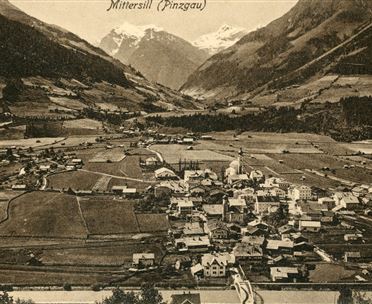
Hollersbach
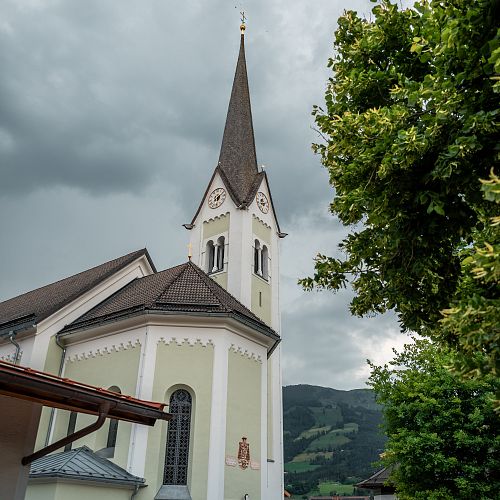
St. Vitus's Church
Since 1348, a chapel-like building with a Gothic net vault has stood on the site of the present church. A small bell dating from 1571 has survived from this earlier church; it is now used as a funeral bell.
Since 1690, the Catholic clergy in Hollersbach have kept meticulous records in baptism, marriage and death registers. These registers provide an insight into the town’s population development and social structure.
In 1892–93, the local community worked with great dedication to realise their wish for a larger, new church building. Construction work was completed in 1900 with the addition of a new tower.
The bells for the new tower were cast by the Graßmayr foundry in Innsbruck. They were melted down for war purposes in 1916. In 1921, the parish commissioned new bells from Kuttler in Vienna. These were requisitioned for the war effort in 1942. In 1951, a commission was placed with the Hamm company in Grödig to replace the bells once again.
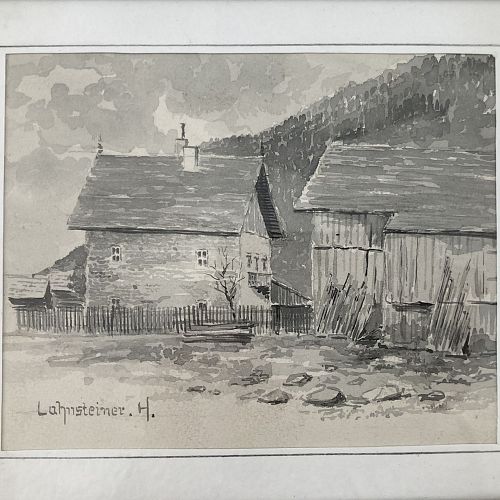
Lahnsteinerhäusl
Josef Lahnsteiner was born on 30 June 1882, the son of a forester, in neighbouring Bramberg. He was ordained a priest in Salzburg Cathedral in 1905 and celebrated his first Mass in the parish church at Hollersbach. He served as a Catholic priest in Altenmarkt, Forstau and Seeham. In Seeham, he initiated the construction of a new parish church. In recognition of his services, he was honoured with the titles of Pastoral Councillor and Monsignor, and was henceforth addressed as Canon. He retired in 1941.
Canon Lahnsteiner spent the second half of his life in Hollersbach, devoting himself primarily to local history research and organising the Pinzgau pilgrimages to Heiligenblut or Bartholomä. Books and unpublished research from his estate remain a rich source of information for anyone interested in local history. His magnum opus was published in three volumes: *Oberpinzgau* (1956), *Unterpinzgau* (1960) and *Mitterpinzgau* (1962).
Josef Lahnsteiner is an honorary citizen of the municipalities of Seeham, Forstau and Hollersbach. He was laid to rest in the local cemetery in Hollersbach.
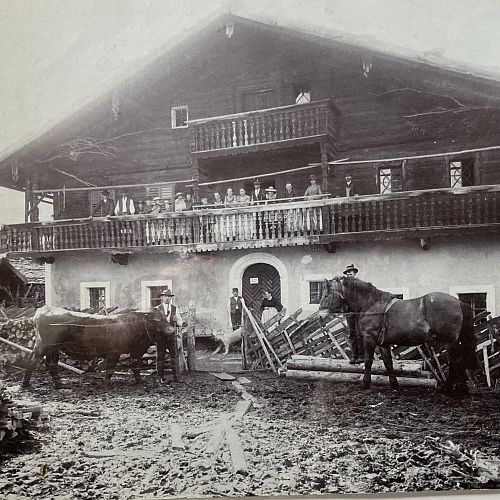
Scharrergut
On the neighbouring plot to the north stood, in the Middle Ages, a residential tower belonging to the Lords of Hollerspeckh, known as the Scharrerturm. The tower was inhabited until around 1750, after which it fell into disrepair.
The oldest surviving documents relating to the Schmied or Scharrer estate date back to 1642. Ancestors of the current owners acquired the property by purchase. The contract was notarised on 6 October 1823 at Mittersill Castle and the original document has been preserved. Since then, members of the Kaltenhauser family have been the owners of the farm.
The family chronicle records that there were many capable farmers at the Scharrer estate, some of whom also served at times as village elders or mayors of Hollersbach. Franz Mayr and Anna Schratl are also worth mentioning here as representative examples. They married in 1889. Franz Mayr was a highly regarded veterinary surgeon and specialist in treating broken bones. There was an abundance of comfrey (Symphytum officinale) in the garden of the Scharrergut. Franz Mayr knew how to use this medicinal plant to treat broken bones.
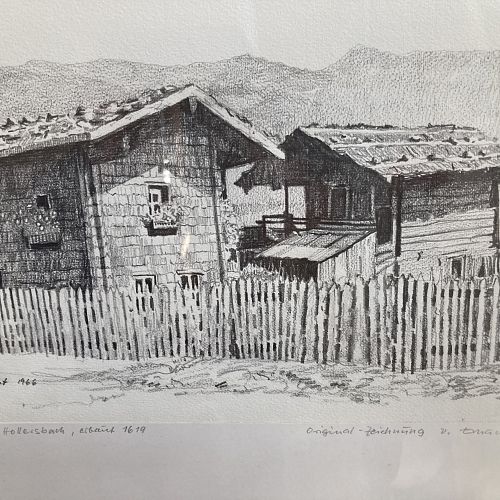
Schödlachgut
The first documented mention dates back to around 1350, when the oldest land register refers to a praedium (estate) called Schedleich. Written sources frequently refer to a ‘half-kornhof’, that is, an estate where grain was grown. This estate, the neighbouring Klausnergut – also a half-kornhof – and the inn kept the same owner for several generations.
The land register of 1606 lists in detail the individual plots of land belonging to the estate, as well as the taxes payable to the sovereign. The house in its present form was built in 1619, whilst the outbuilding was later replaced by a modern pavilion.
Stuhlfelden
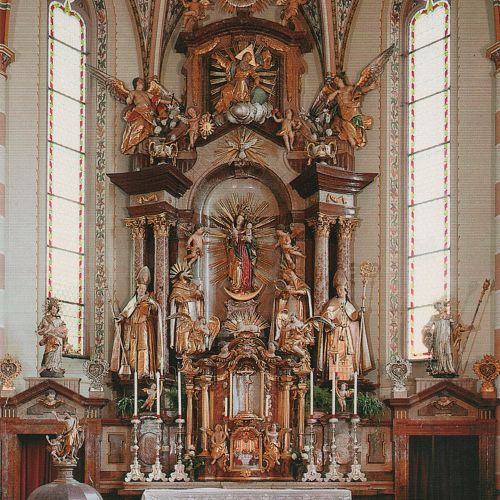
Stuhlfelden chruch
It is thought that a place of worship was built as early as the 8th century as part of the missionary activities originating in Salzburg. When the Archbishops of Salzburg organised their parishes in the High Middle Ages, so-called mother churches and parish churches were established. The first documented mention of a parish priest from Stuhlfelden, a certain Heinrich, dates from the year 1160. Stuhlfelden thus became the mother church of the Oberpinzgau region. During extension work in the 13th century, the rock foundations of the pre-Romanesque church ‘Maria am Stein’ were later discovered.
Particular treasures include the Baroque ‘Ölberg’ group on the south side of the choir and a Baroque group of marble figures. Also worth seeing are numerous fine gravestones from the 16th to the 18th centuries, commemorating distinguished secular and ecclesiastical figures from the village.
Stuhlfelden was and remains an important place of pilgrimage. Pilgrims came to see the statue of the Virgin Mary (dated around 1470) on the magnificent Baroque altar by Petrus Schmid. Pilgrimages are still held there today.
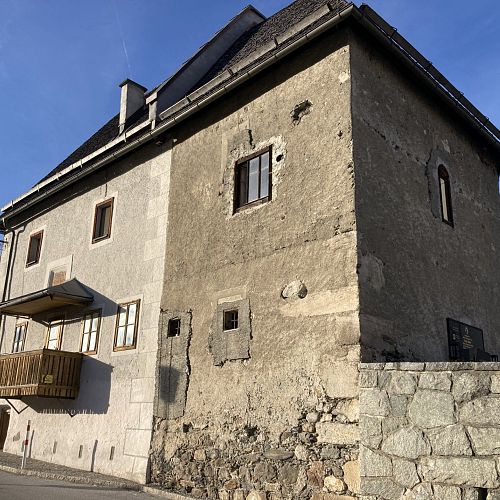
Verwalter
In the oldest land register, this building is referred to as the *Curia superior* (upper court). In the late Middle Ages, the *Kellner* of Stuhlfelden (land register administrators of the archbishop’s estates) had their headquarters at this court, as the *Kellnhof* had fallen into a state of severe disrepair due to repeated flooding from the stream. The term ‘administrator’ dates from this period. In 1597, the administrative units of the Pfleggericht and the Urbaramt for the Oberpinzgau were merged at Mittersill Castle.
The 1741 register of souls mentions the ‘Verwaltergut’ (administrator’s estate) at Tafern am Freydhof. Through the tavern, the ‘Verwaltergut’ thus became the ‘Verwalterwirt’ (administrator’s inn). The Lechner family owned the ‘Verwaltergut’ for many years. Theresia Lechner married a son of the Zehenthof in Pirtendorf, and so the name Altenberger was added to the inn’s name. Katharina Altenberger bought the Weyerstöckl – also known as the ‘Kramladen am Weyer’ – and thus brought the retail trade to the inn. To this day, there is a general store at the ‘Verwalterwirt’.
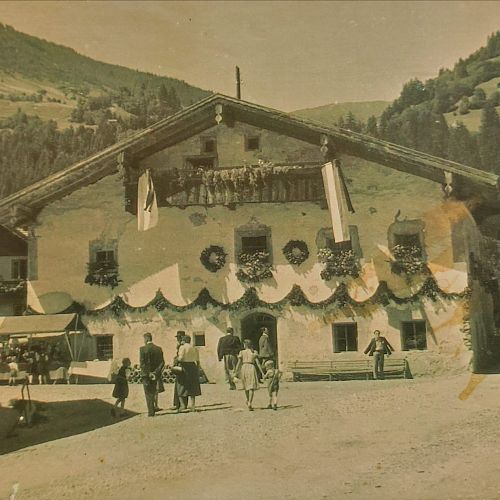
Oberbäckn
The property is first mentioned in 1583 in the Mittersill Court Chamber records. The baker Georg Moser is referred to there as the ‘Oberbäckn’. Today, the ridge of the house bears the date 1687. For a long time, there were two bakers in Stuhlfelden – the ‘Unterbäck’ and the ‘Oberbäck’.
The parish registers of 1741 show that, in addition to the nine family members, a further 20 to 30 people lived and worked at the ‘Oberen Backstatt’.
The Zotter family has owned the Oberbäck estate since 1867. Johann Zotter relinquished the licence to operate the bakery around 1880. For a long time, a lime tree and the village well stood in front of the Oberbäcknhaus. In 1997, the Wiberg company erected a new well in front of the house to commemorate the company’s beginnings in Stuhlfelden.
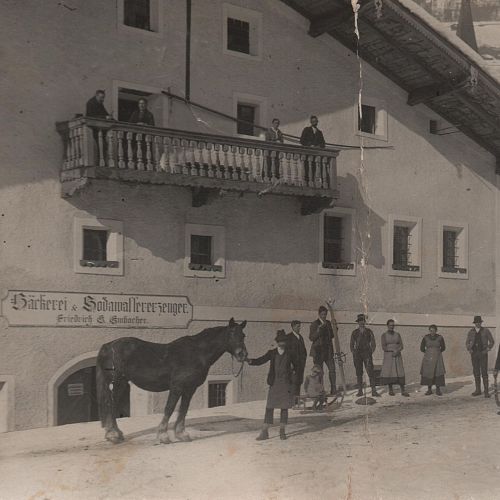
Unterbäckn
The Stuhlfeldner Hof is first mentioned in 1403 and, as a freehold estate, was one of the oldest farmsteads in Stuhlfelden. The house was subject to an old baker’s privilege. The name ‘Unterbäckn’ derives from this licence to operate a bakery. The Wallner family owned the estate for several generations. Friedrich Embacher, who had been the owner since 1897, was involved not only in the baking trade but also in the production of soda water and ‘Kracherln’ (carbonated lemonades). His successor, Fritz Embacher, was widely known as a horse lover.
Frequent flooding from the mountain streams caused mudslides in the area around the house on several occasions. The deposits of sand and gravel turned the original ground floor into a cellar. To reach the new front door, it became necessary to build a flight of steps.